Große Keilspitze (2739 m) from Dolomitenhütte
Technical difficulty: 8/10
Fitness: 8/10
Objective danger: 8/10 (avalanche-prone sections at Laserztörl, rock/icefall risk in the couloir, exposure on summit ridge)
Landscape: 9/10
Busy: 3/10
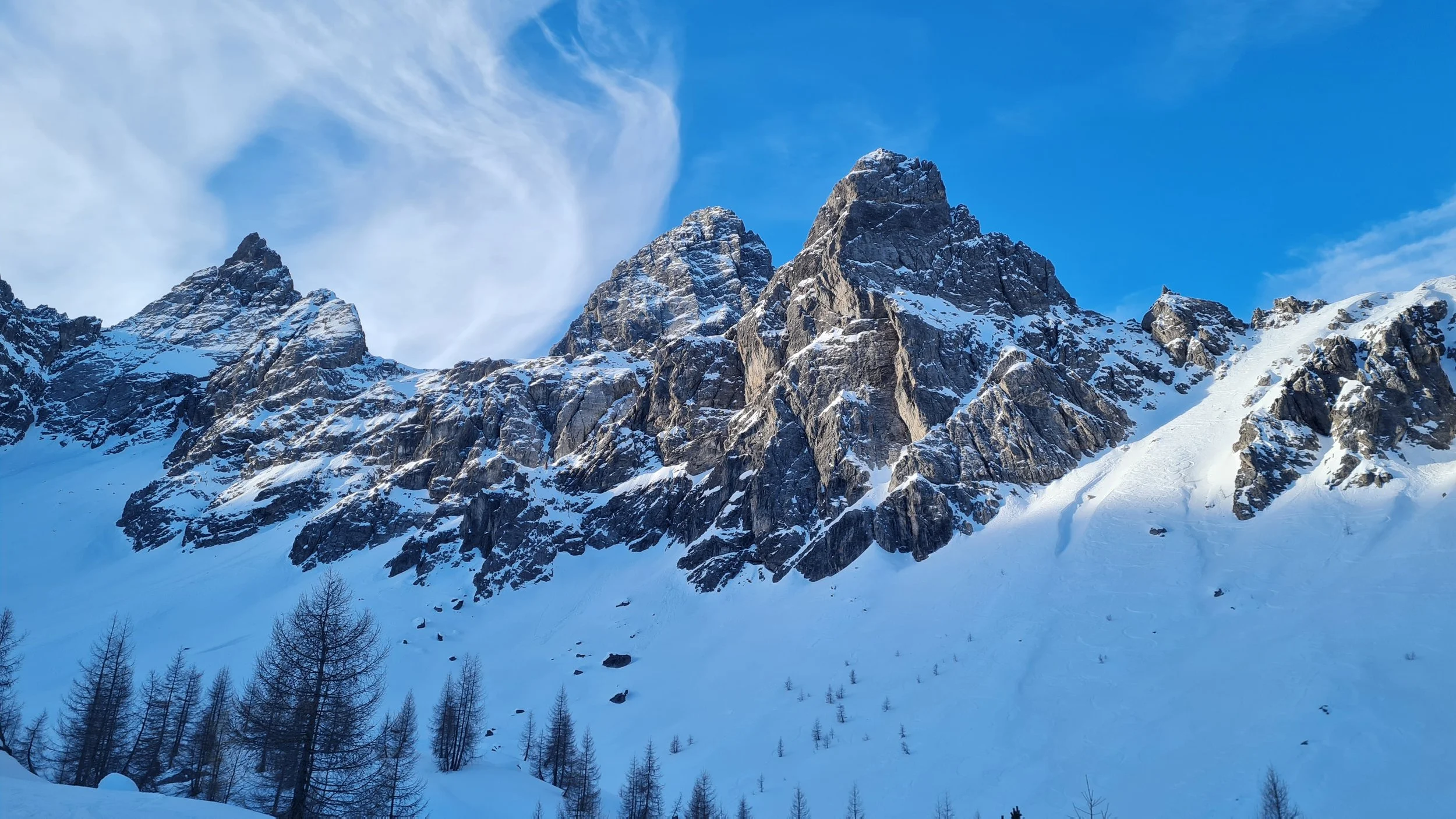
A true alpine ski adventure through a stunning south-facing couloir onto the second-highest peak of the Lienz Dolomites
Starting point: Dolomitenhütte parking lot
Ending point: Dolomitenhütte parking lot
Ascend: 1850vm / 7h
Exposition: Laserztörl west/east, Keilrinne south
guest post by @bennibru
Route:
The ski tour to the Große Keilspitze is one of the true classics of the “Lienzer Dolomiten” – a demanding, committing, and incredibly rewarding line that combines a long alpine approach with a spectacular couloir ascent. Due to the effort required, the need for excellent conditions, and the technical nature of the route, this is far from a crowded “standard tour” – but exactly what makes it such a memorable adventure.
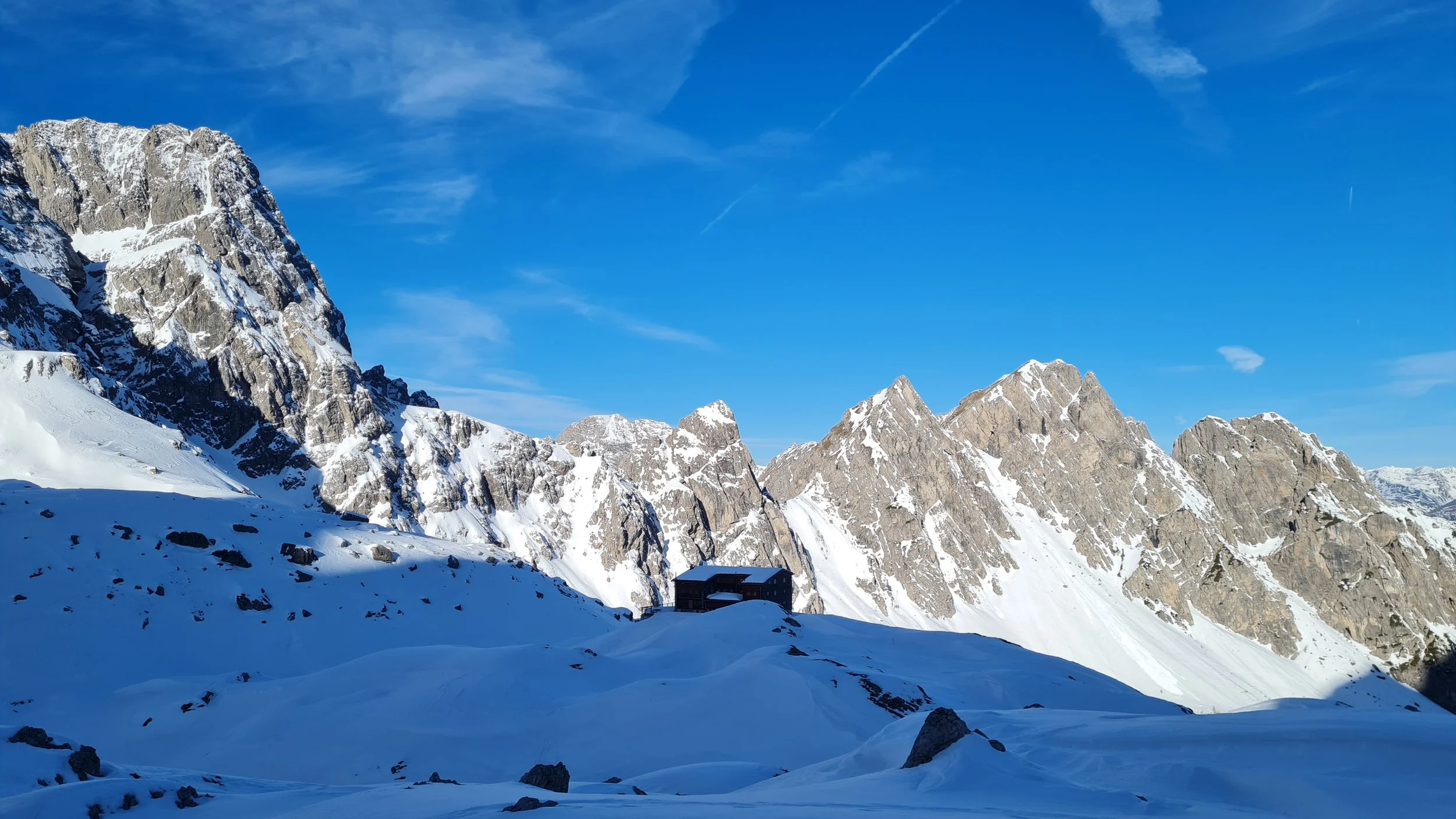
Like many tours in the Laserz basin, the starting point in midwinter is the Gasthof Kreithof (1100 m), while in spring, with the road open, the tour typically starts at the Dolomitenhütte (1620 m). An even quieter alternative leads directly from the valley via the Lavanter Alm, though this requires good snow coverage all the way down and avoids the crossing of the Laserztörl.
Ascent Laserztörl (2497 m)
The tour begins with a flat approach toward the Insteinalm – in spring conditions, expect to carry skis for about 1 km. At a junction, we leave the forest road heading left and ascend either via the left or right gully (usually with an existing track) in a southerly direction. For a more efficient climb, we soon transition onto the summer trail along a gentle ridge, leading up to the Marcher Stein, a distinct rock formation providing a little wooden shelter. Here the route turns east, opening up a breathtaking view into the Laserz basin.
Our next target, the Karlsbader Hütte, is already visible and can be reached either via the road or directly across the Laserz basin with a short steeper section. From there, the route continues across the frozen Laserzsee, weaving between scattered boulders before climbing in switchbacks toward the clearly visible Laserztörl (2497m). The final meters are usually done on foot.
This is also where things start to get serious: the slope steepens significantly, and the towering north face of the Wildsender above can release snow and debris. Careful assessment of avalanche conditions is essential here.
Descent Lavanter Alm Valley
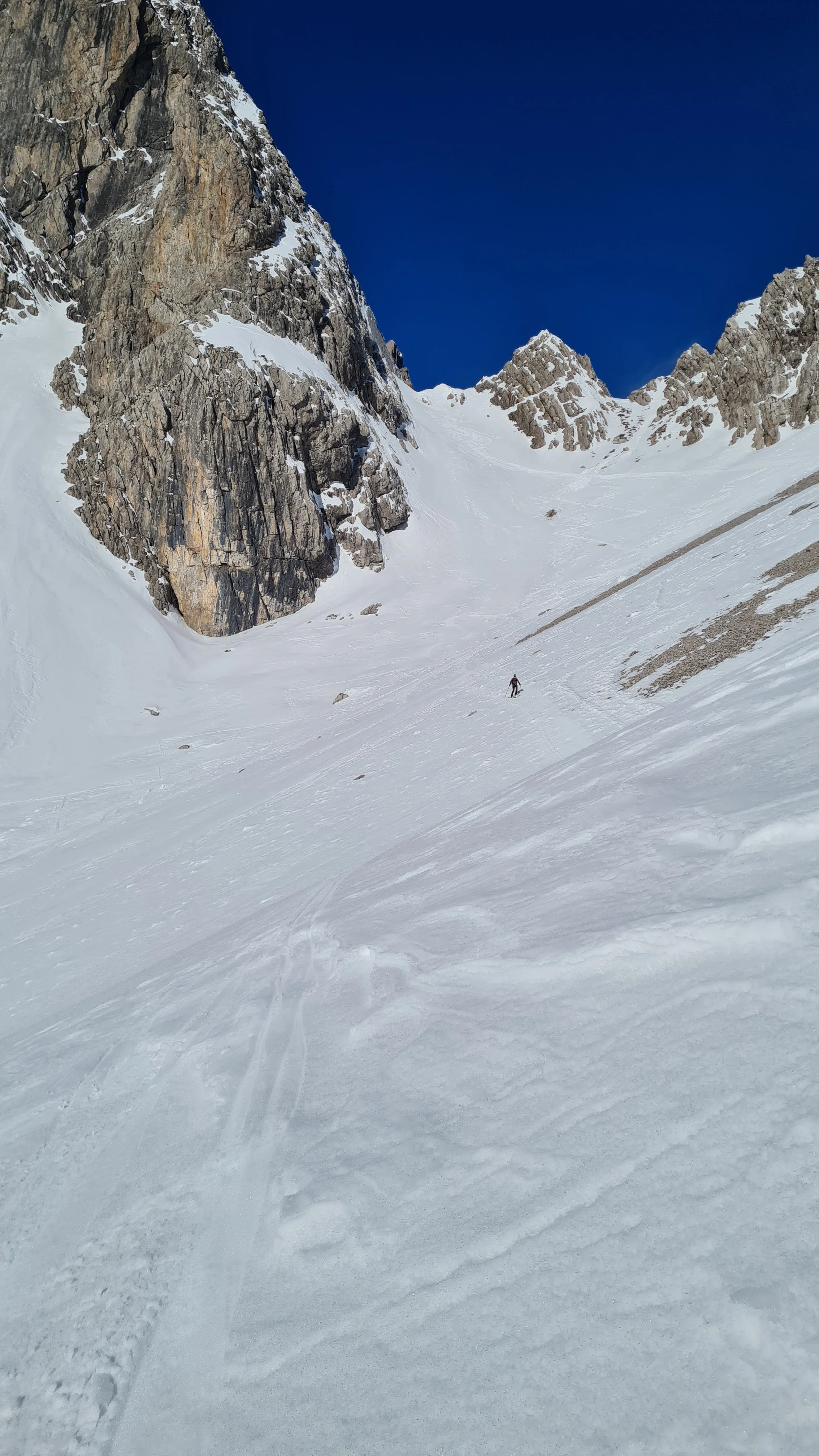
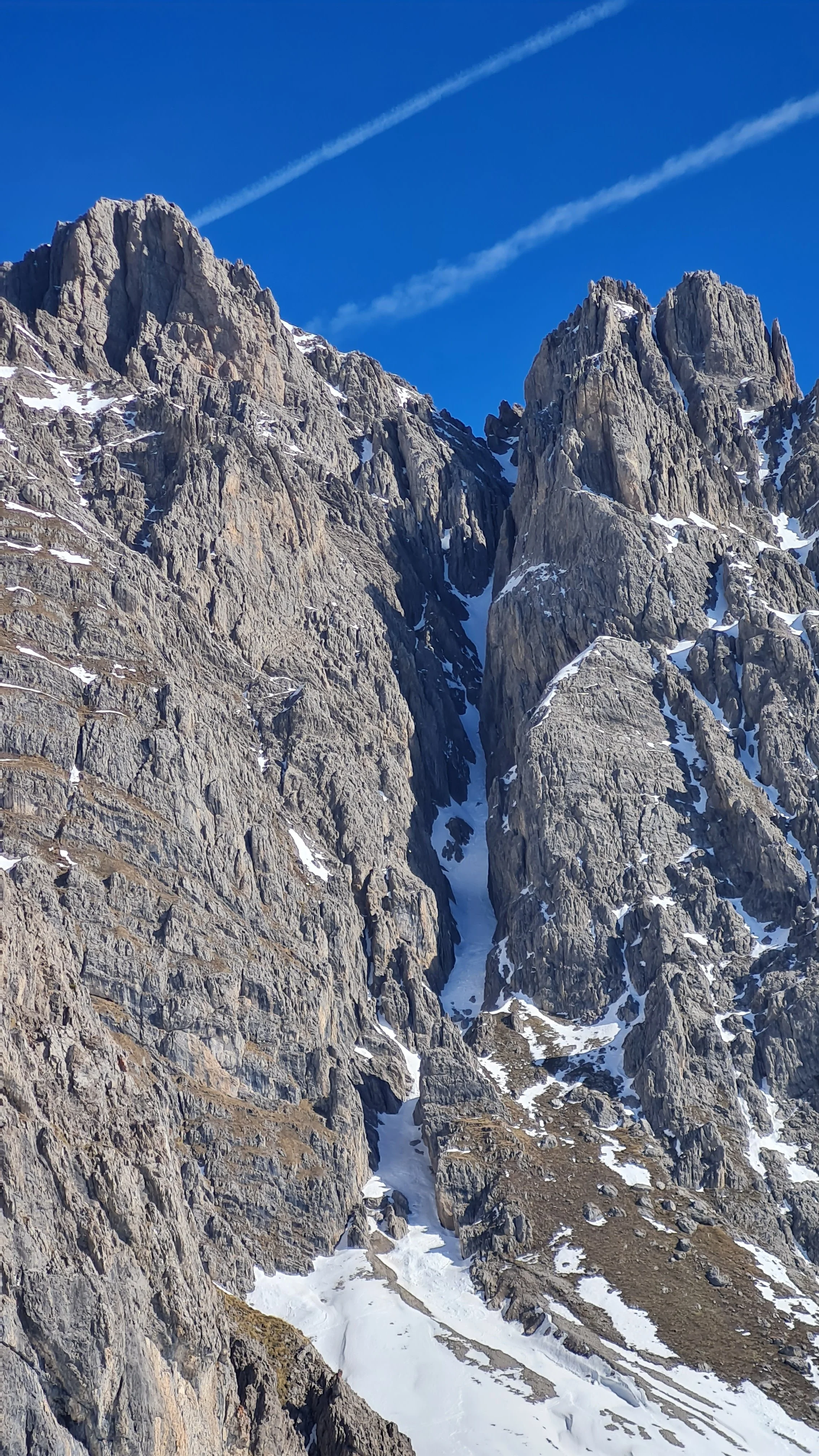
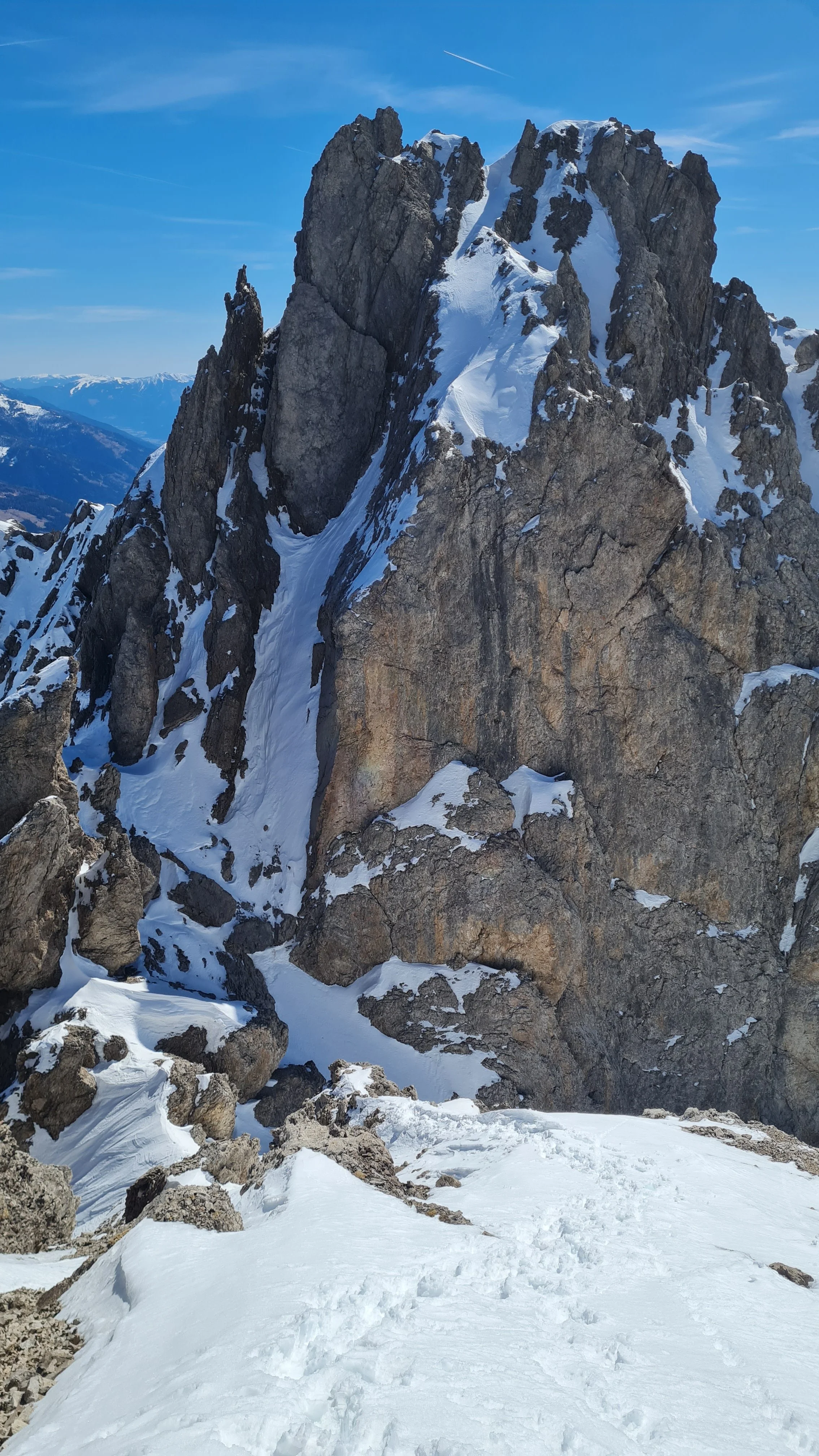
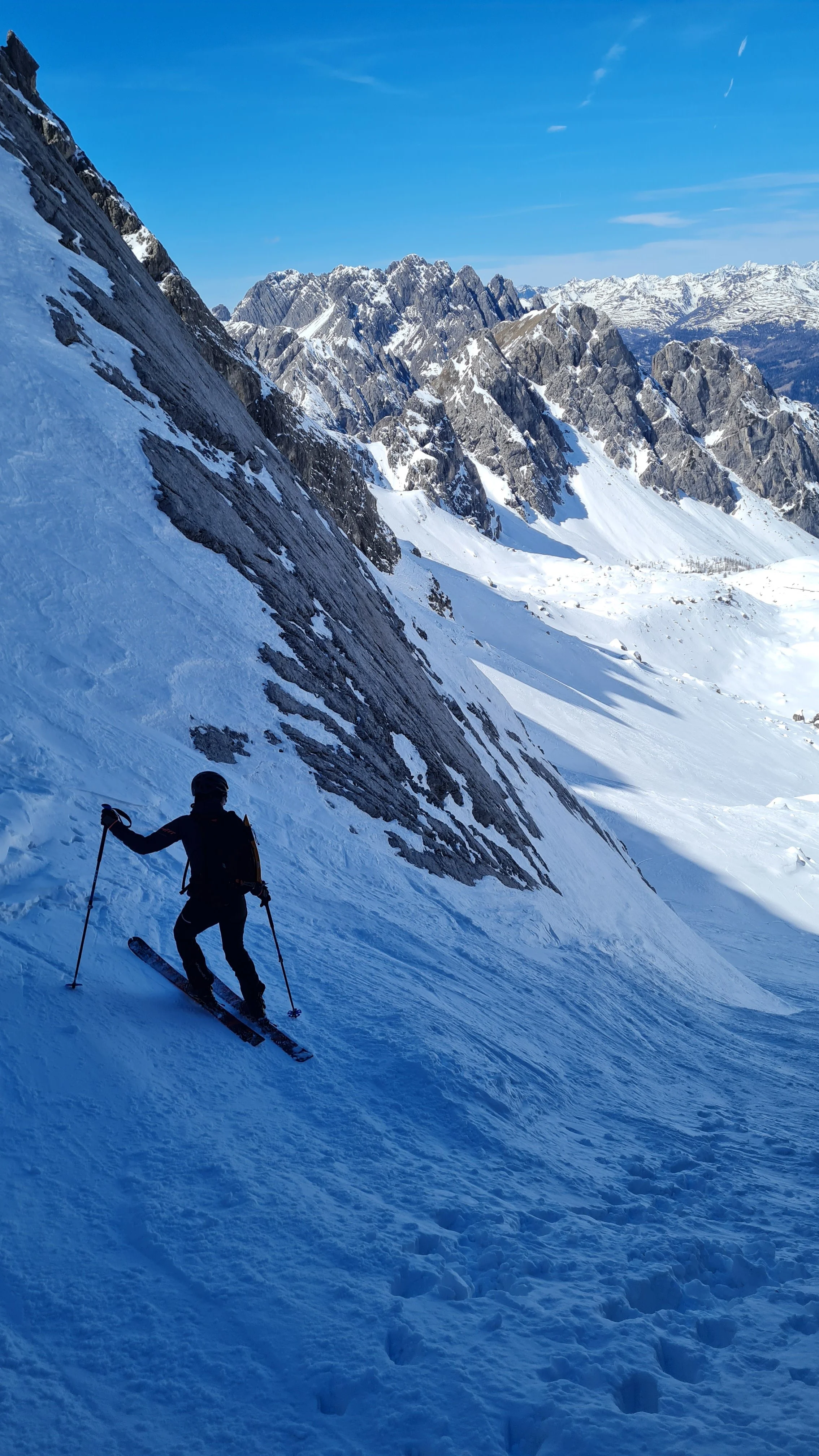
On the eastern side, the descent from the Laserztörl is similarly steep but usually far less tracked. In winter, wind-loaded snow is the main concern, while in spring you might already enjoy your first turns in perfect morning corn. We traverse high along the southern slopes, staying as elevated as possible, until reaching a small plateau at around 2200m at the end of a rocky rib. From here, the highlight of the tour comes into view – the striking couloir leading up to the Keilspitze.
If this view doesn’t deter you from continuing: after a short continuation of the traverse northward, we put skins back on as the terrain steepens toward the base of the couloir.
Ascent Keilspitze
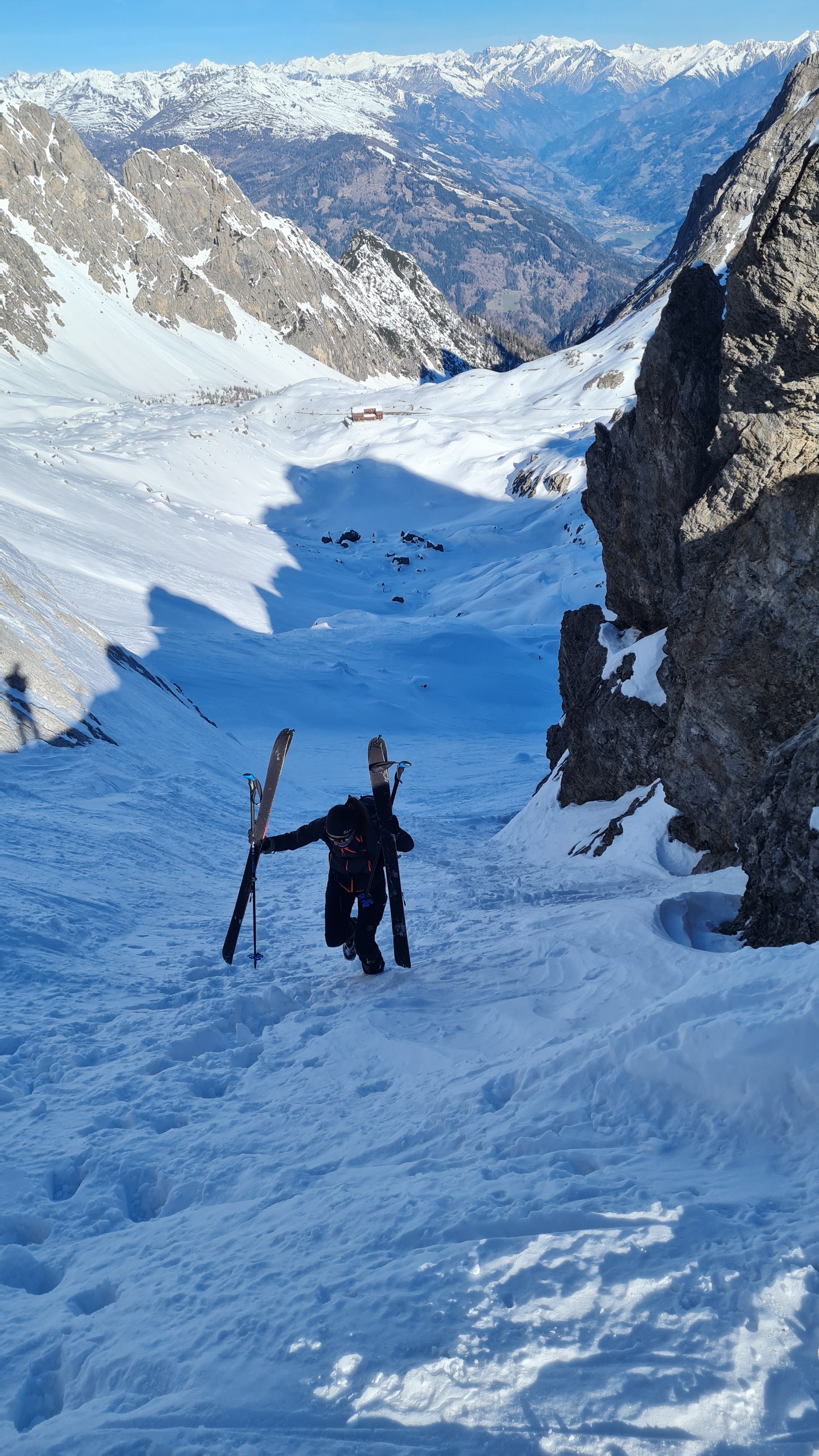
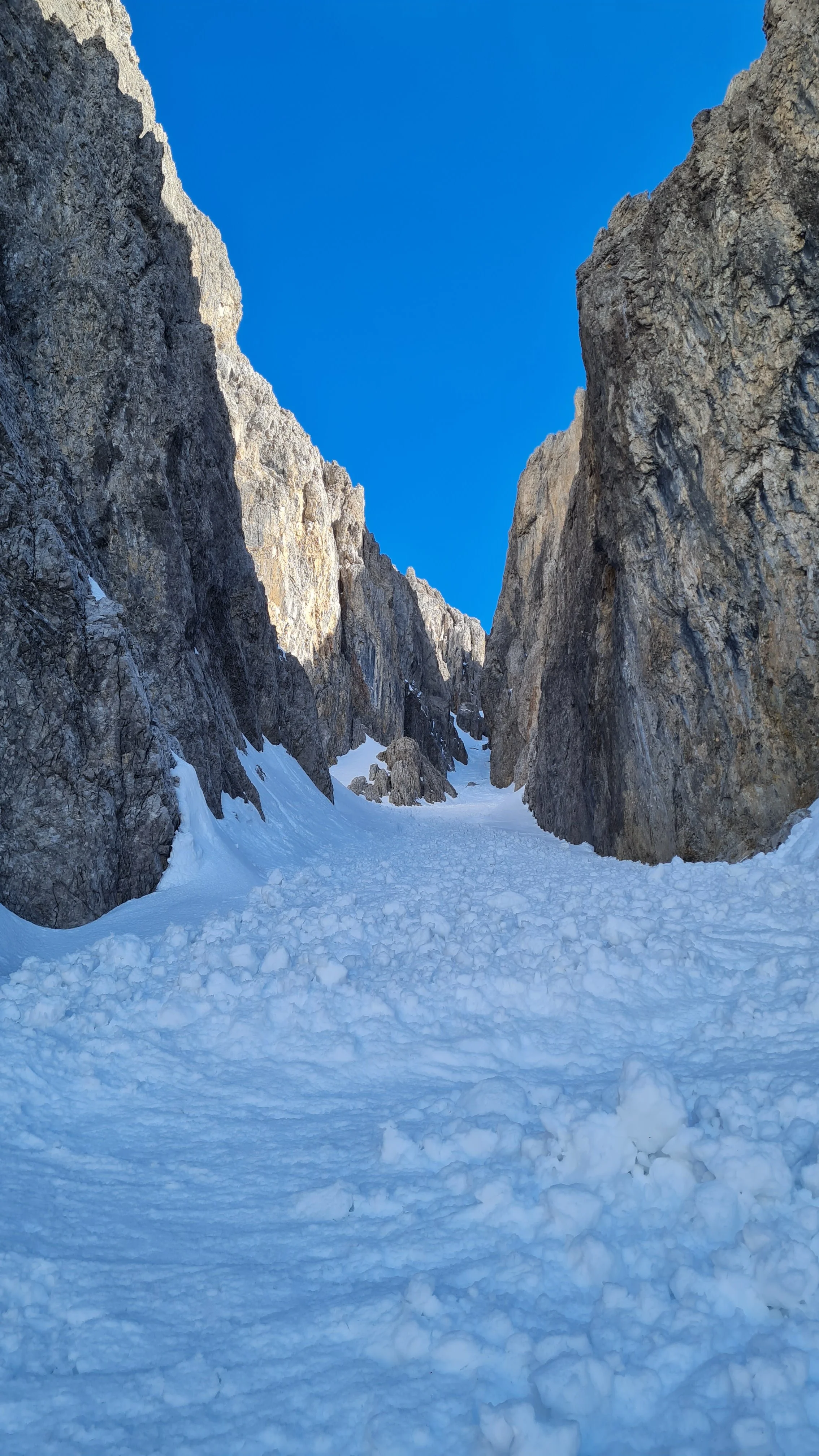
The approach to the couloir is straightforward, either directly through the lower gully or slightly left from it, below the south-facing slopes. The couloir itself starts off somewhat winding but relatively moderate before gradually steepening.
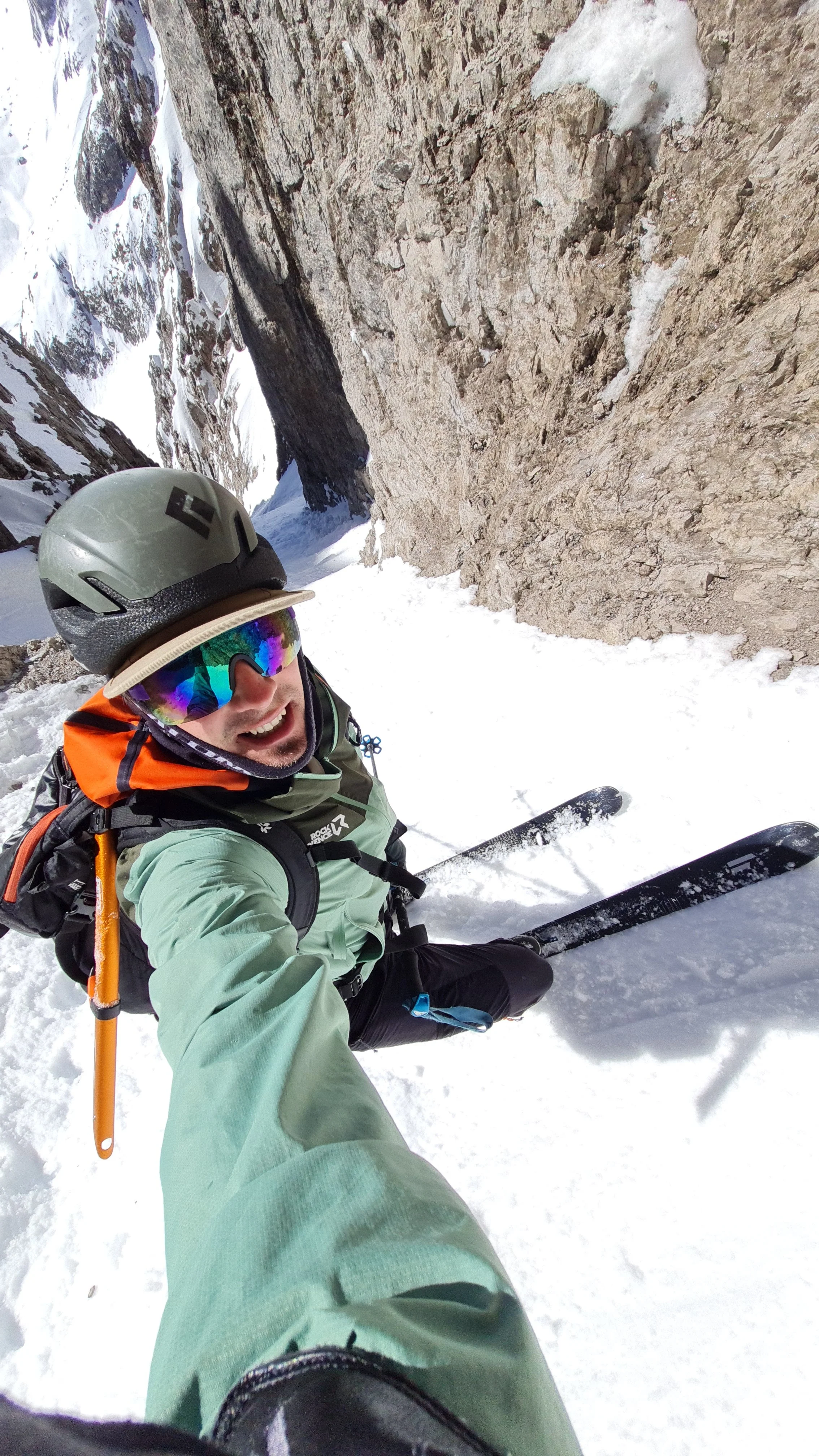
From here on, conditions dictate everything. With good snow, soft surface, and solid kick-turn technique, much of the couloir (around 40°) can be climbed on skis. In firmer or icy conditions, a full bootpack is often the more efficient and safer option. Carrying ski crampons, crampons, and an ice axe is strongly recommended to adapt to changing conditions.
Despite its southern exposure, the couloir sees surprisingly little direct sun, even in spring. Waiting for perfect corn here may mean getting too late for the rest of the tour – timing is key.
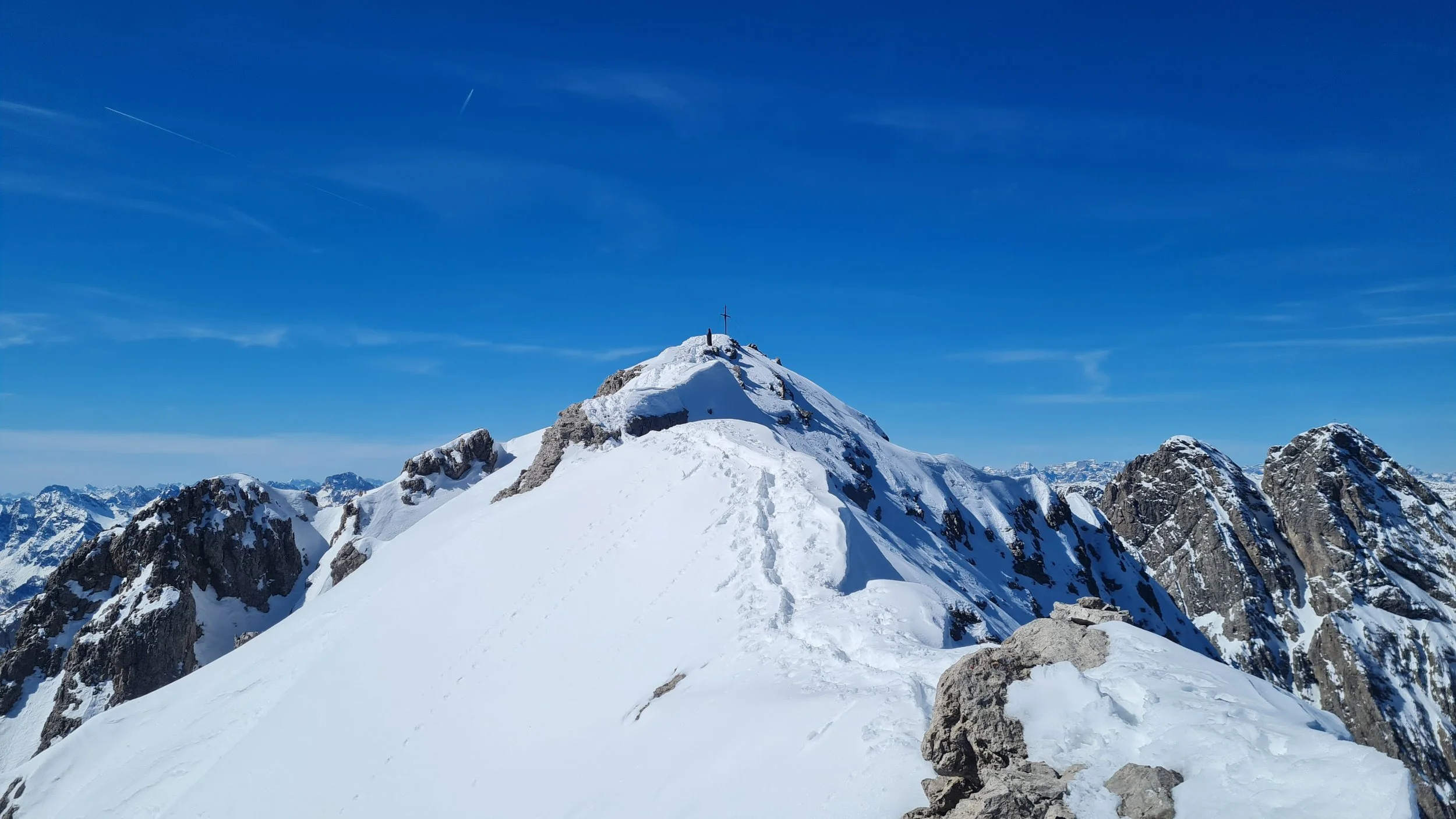
In low-snow conditions, a rocky step near the top can become a crux, either requiring a short scramble or a steep bypass on climber’s left. Above it, the saddle between the Kleine and Große Keilspitze is quickly reached. From here, we follow the exposed ridge leftward toward the summit – flattening out but quite airy. In excellent conditions, this section may even be skied.
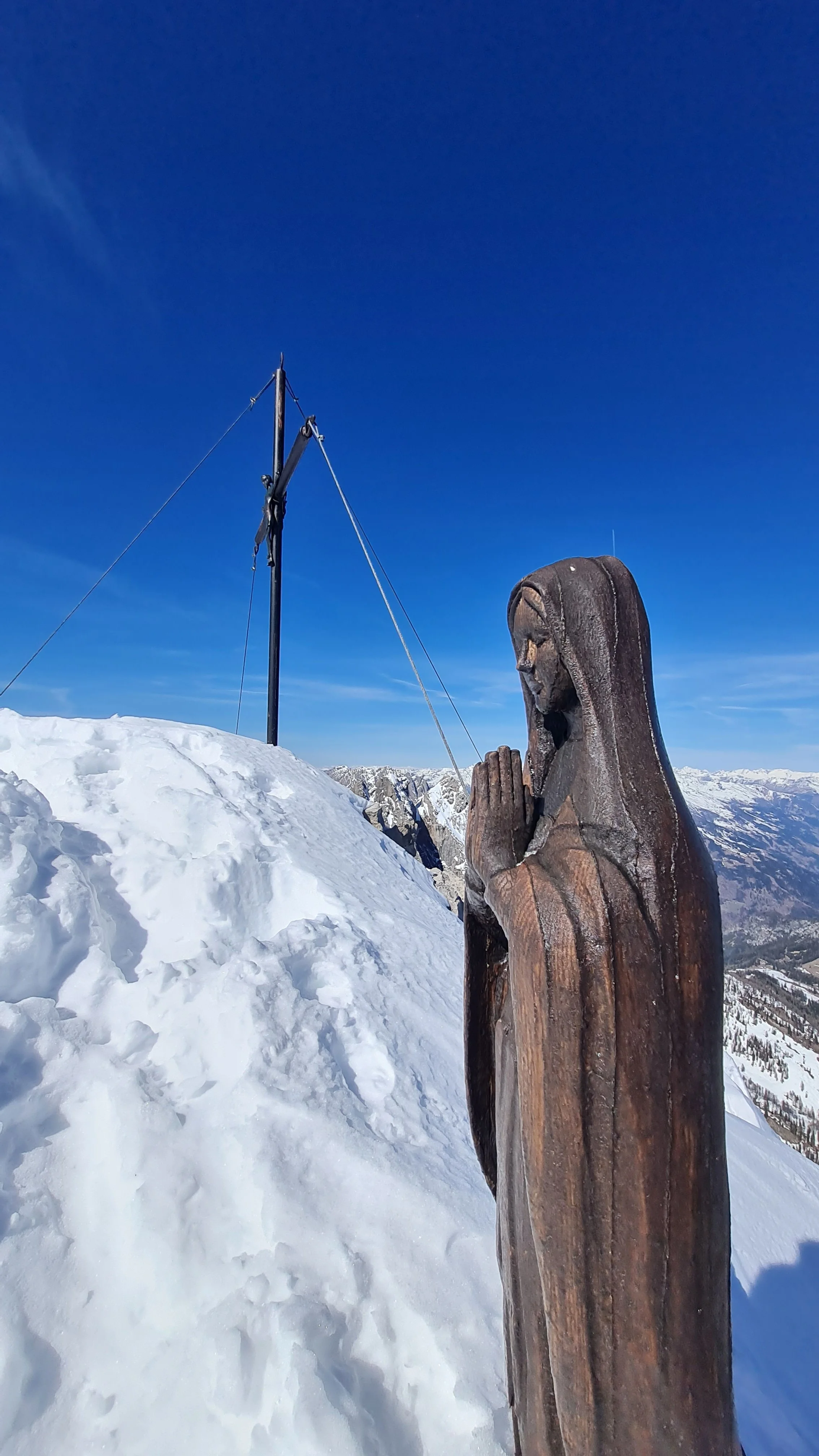
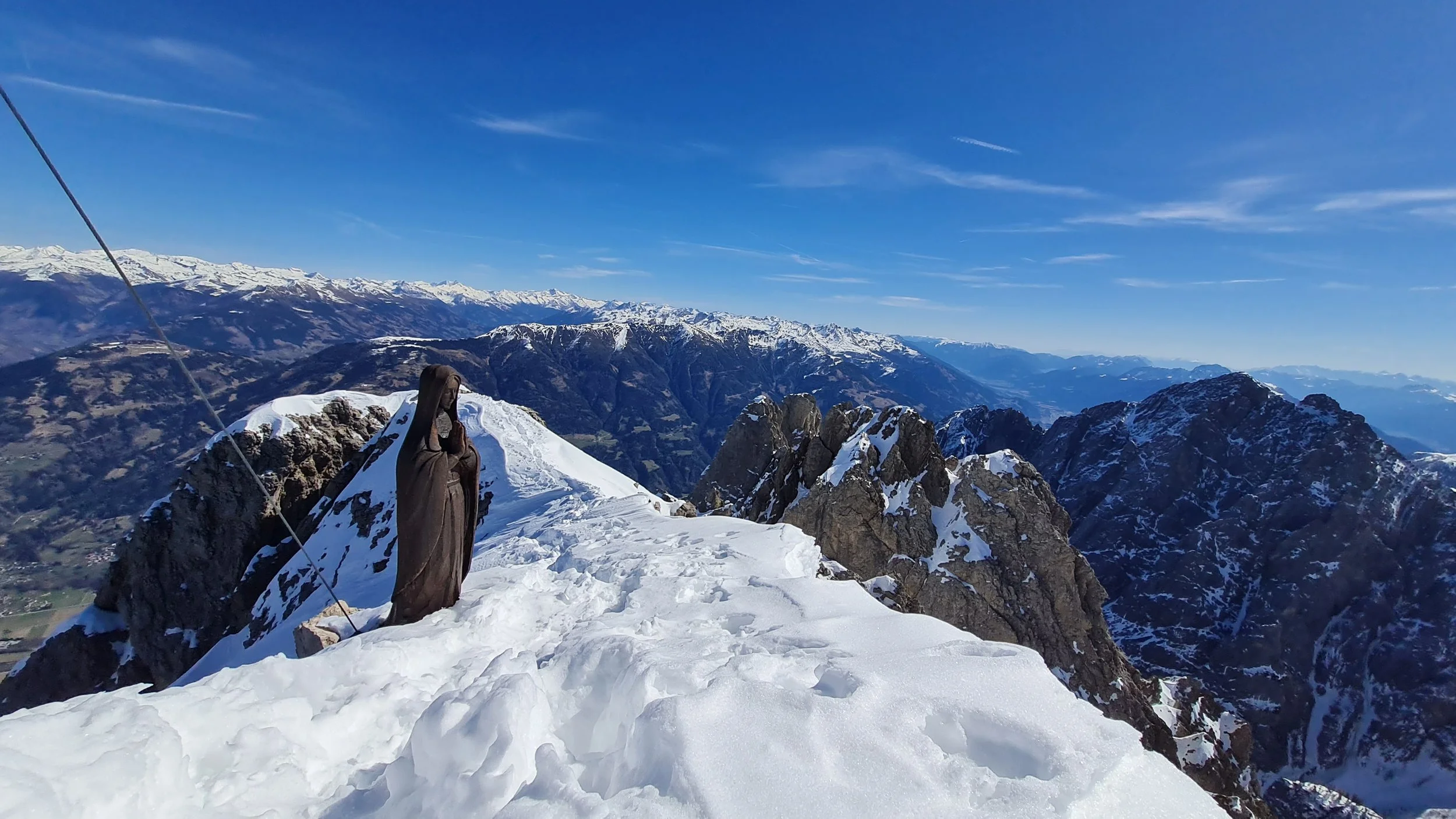
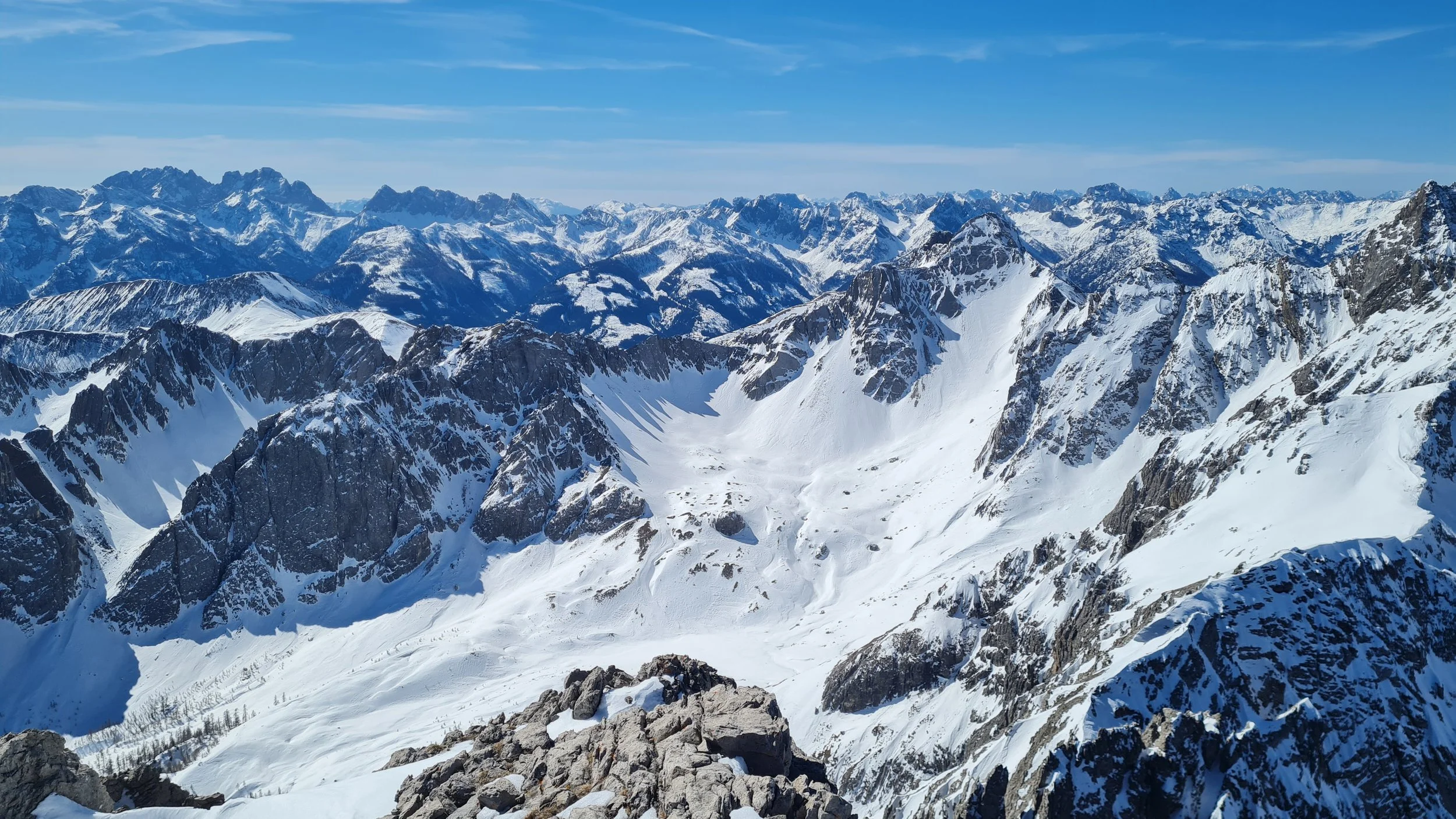
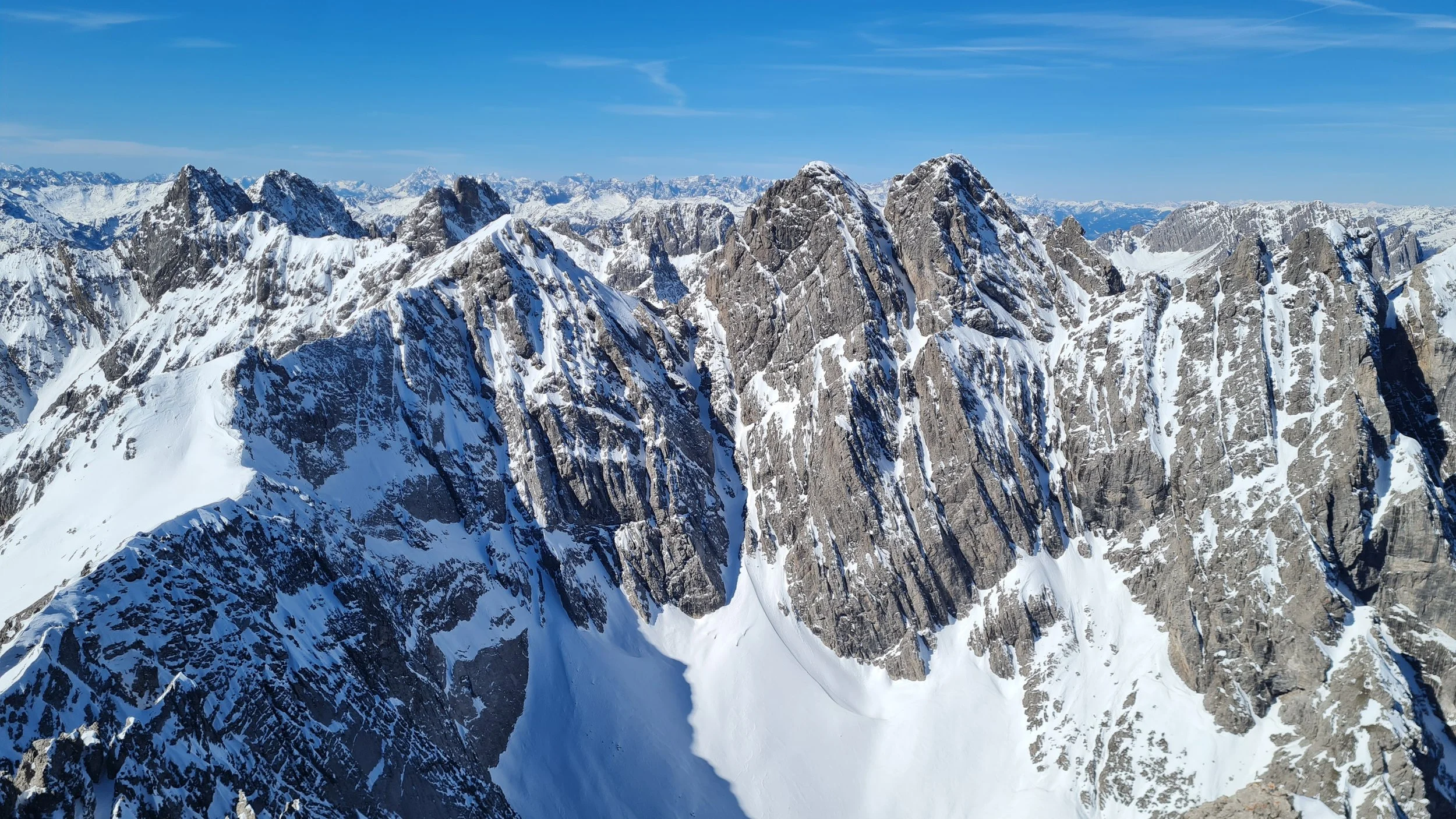
At the summit, next to the cross, stands a striking wooden Madonna statue – a powerful contrast to the wild alpine surroundings. Combined with the breathtaking panoramic views – from the rugged peaks of the Lienz Dolomites to the Großglockner and far across the Carnic Alps – this is a summit that truly rewards the effort.
Descent / Return
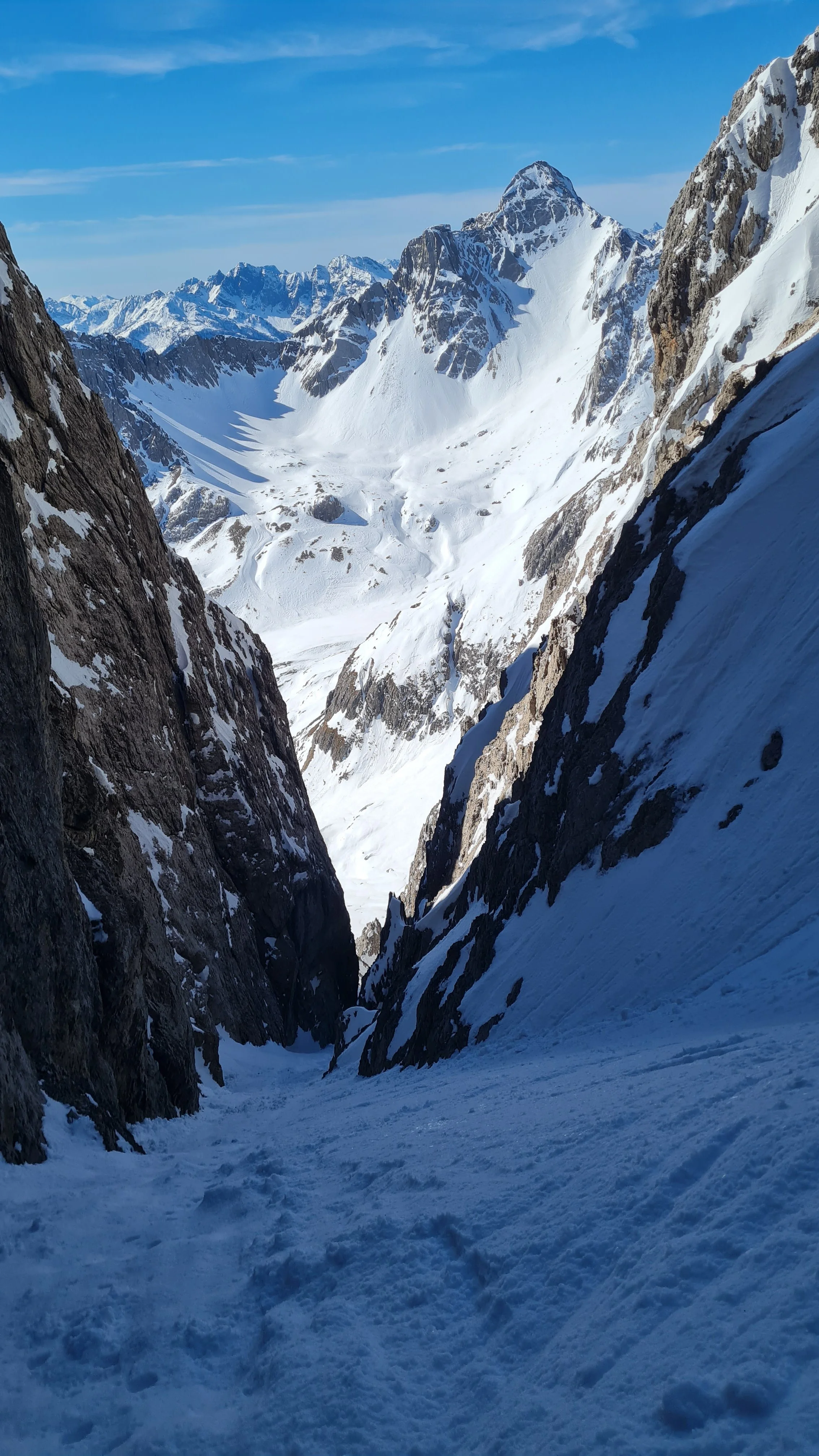
The descent largely follows the ascent route. Depending on conditions, you may be able to ski from high up in the couloir, but even in ideal snow, the steepness and narrowness demand confident and precise skiing. In lean conditions, sections may require careful side-slipping or even downclimbing.
The roughly 300 vertical meters back up to the Laserztörl should not be underestimated – especially with warming temperatures and the potential for loose or wet snow avalanches from the surrounding south-facing slopes. From the saddle, a high traverse toward the Ödkar can help avoid a short re-ascent near the Laserzsee.
The final descent from the Marcher Stein follows either the ascent track or – often the better option in spring – the forest road with its gentle switchbacks. To round off the day, a stop at the beautifully located Dolomitenhütte with its sun terrace is highly recommended.
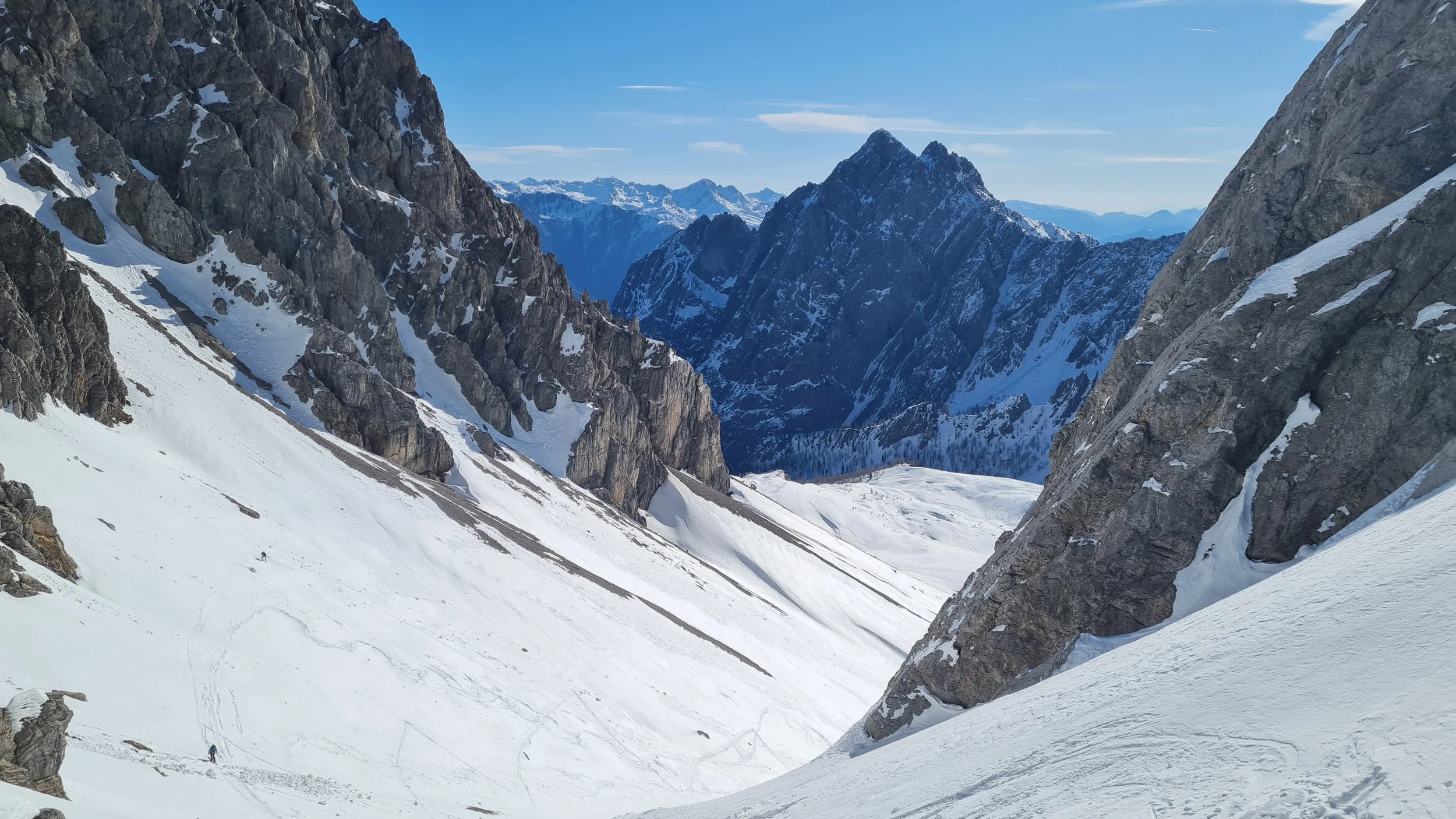
Pro Tip: Stay aware of potential rock and icefall in the couloir – but don’t forget to pause, turn around, and take in the dramatic view of the towering Grubenspitze and its impressive north face right on the opposite side.
Photos by @bennibru and @sontschi2604